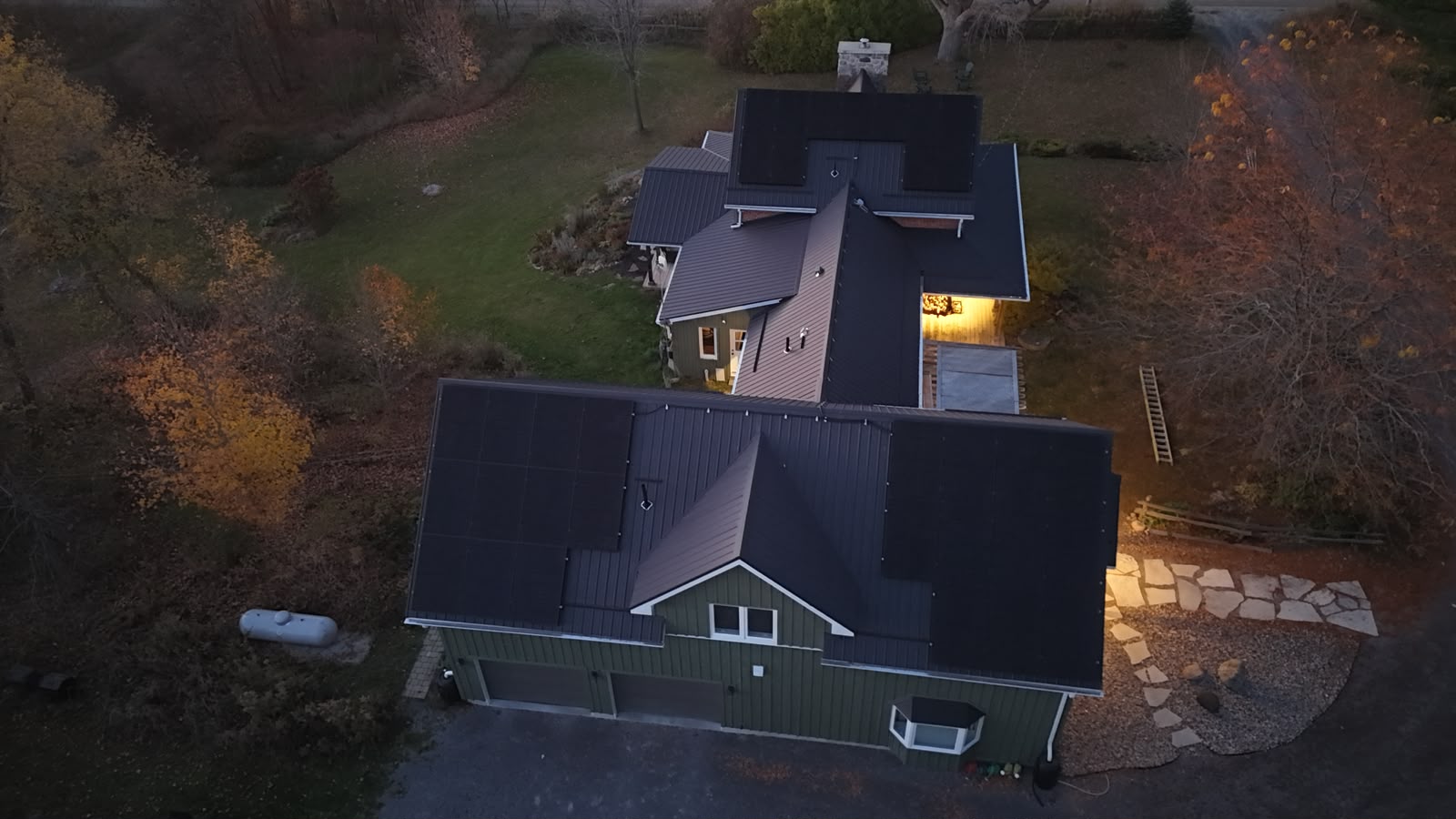
Quick Answer: Yes, solar is worth it for most Canadian homeowners in 2026. After Ontario’s recent 29–30% hydro rate hikes, a 10 kW system can save up to $2,200–$2,800 a year, achieving a 6–9 year payback period after applicable rebates, depending on usage and rate plans.
Article Summary
Solar power is undeniably worth it for most Canadian homeowners and businesses in 2026. Residential solar systems currently cost between $2.42 and $3.50 per watt before incentives, with typical payback periods sitting between 6 and 10 years on systems built to last 30 years. Rising electricity rates across the provinces, combined with powerful provincial rebates and the 30% federal Clean Technology Investment Tax Credit (ITC) for businesses, make solar highly financially attractive.
Solar panels work incredibly efficiently in Canadian winters—cold temperatures actually improve photovoltaic efficiency, and the reflection from snow (the albedo effect) boosts overall production. Programs vary coast to coast: Ontario offers Home Renovation Savings (HRS) incentives alongside Ultra-Low Overnight (ULO) net metering; Alberta boasts the Solar Club with up to $0.30/kWh export credits; while BC, Saskatchewan, Manitoba, and the Maritimes all operate beneficial net metering programs. Commercial solar additionally benefits from stacking the 30% ITC with accelerated depreciation.
With thousands of installations nationwide, Otter Energy provides the proven winter performance data and expertise to maximize your ROI.
The 2026 Landscape: Solar Adoption in Canada
Solar adoption in Canada is accelerating faster than ever. In 2026, rising electricity prices, increasing grid instability, and aggressive climate goals have made solar not just an environmental choice, but a core financial strategy.
Despite lingering concerns about snow and the cold, Canada consistently ranks among the most promising markets for long-term solar ROI. The real question isn’t “Does solar work in Canada?”—it’s “How much money can I save, and who installs it properly?”
This expert guide breaks down real costs, winter performance, and the latest 2026 provincial programs, explaining how Otter Energy delivers systems engineered specifically for the harsh Canadian climate.
Is Solar Worth It in Canada in 2026?
- Most medium-to-high usage homes see a 6–10 year payback with a 30-year system life.
- Winter performance is robust because cold temperatures boost panel efficiency and snow acts as a powerful reflector.
- Typical residential costs run about $2.42–$3.50 per watt before incentives.
- Provincial rebates and the 30% Clean Tech ITC materially improve business and residential ROI.
- Battery storage adds immense savings where time-of-use pricing is high, and guarantees backup power.
Solar Panel Performance: Myths vs. Reality
Myth: Solar panels don’t work in winter.
Reality: Solar panels rely on light, not heat. In fact, cold weather improves voltage efficiency, and snow can actually help by reflecting extra sunlight onto the panels.
- The Cold Weather Advantage: A solar panel operating at -20°C can be up to 18% more efficient than the same panel on a scorching hot summer day.
- The Albedo Effect: Fresh snow reflects up to 90% of sunlight. When paired with bifacial panels (which generate power from both the front and back sides), this reflected light can result in a “bifacial gain” of 10% to 25% in winter production.
- The Otter Energy Advantage: Our systems utilize historical irradiance data and precise roof pitch modeling to ensure snow sheds quickly, maximizing your annual energy production in every province.
Real Cost of Solar Panels in Canada (2026)
Installed system costs vary by province, roof type, and energy usage. As of 2026, residential costs typically range from $2.42 to $3.50 per watt before tapping into incentives.
| System Size | Typical Cost (CAD) | Avg. Annual Savings |
| 5 kW | $13,000 – $17,500 | $1,100 – $1,500 |
| 7.5 kW | $18,750 – $26,250 | $1,600 – $2,200 |
| 10 kW | $25,000 – $35,000 | $2,200 – $3,200 |
| Battery Storage | $10,000 – $18,000 | Critical for total grid independence |
2026 Provincial Guide: Rates, Rebates & ROI
Ontario: The ULO Opportunity
Ontario’s pricing shifts have created a massive opportunity for smart storage.
- Rate Comparison: The standard on-peak rate has jumped considerably, but the Ultra-Low Overnight (ULO) on-peak rate is now a staggering 39.1¢/kWh. You can use an Otter Energy battery system to charge when power is dirt cheap (around 3¢/kWh overnight) and discharge during 39.1¢/kWh peak hours.
- Rebates: The Home Renovation Savings (HRS) program offers up to $10,000 back ($5,000 for solar + $5,000 for battery) for load displacement systems.
- Business: Commercial entities can stack the 30% Clean Tech ITC with accelerated depreciation for up to a 55% first-year write-off. Businesses can also leverage the HRS rebate up to $860,000 for load displacement.
Alberta: The Solar Club™ & CEIP Financing
Alberta is a Canadian solar powerhouse, boasting 2,300 to 2,600 sunlight hours per year.
- The Solar Club™: Allows members to switch between a high-export rate (up to 30¢/kWh) in the summer to sell surplus energy, and a low-import rate (~8¢/kWh) in the winter.
- CEIP Financing: Dozens of municipalities (like Calgary, Edmonton, and Lethbridge) offer Clean Energy Improvement Program financing up to $50,000 attached to your property tax bill, frequently with incredibly low interest rates or direct rebates.
Saskatchewan: Hedging Against Hikes
- Power Prices: With electricity costs pushing 15¢/kWh and export credits at 7.5¢/kWh, direct self-consumption is key to maximum savings.
- Battery Edge: Get a smart battery with Otter Energy to keep your lights, Wi-Fi, and sump pumps running seamlessly during unpredictable grid outages.
Nova Scotia: Energy Security & Business Credits
- Power Prices: Rates are approximately 18.5¢/kWh and rise every year. Solar stops these increases cold.
- Business Rebate: The Efficiency Nova Scotia Business Energy Rebate offers ~25¢ per kWh of yearly production (up to $30,000). Stack this with the 30% ITC for an unbelievably short payback period.
- AI Battery: Our smart batteries learn your specific household usage to discharge during expensive peak hours, heavily slashing your grid reliance.
New Brunswick: The Retrofit Powerhouse
- Power Prices: Electricity sits at ~15¢/kWh and continues to climb.
- Home & Business Rebates: Save Energy NB provides up to $3,000 ($200/kW) for homes. The Commercial Buildings Retrofit Program offers $0.432 per kWh saved, up to $250,000.
Why Choose Otter Energy?
In 2026, investing in solar is a strategic financial decision, not just an optional upgrade. With Otter Energy, you get:
Canadian-Optimized Design: We use Tier-1 bifacial panels specifically designed to thrive under heavy snow loads and harsh winters.
AI-Powered Energy Management: Our smart batteries automatically pre-charge before forecasted Canadian winter storms.
Hassle-Free Incentives: We handle all provincial permits and federal ITC/CCA paperwork for you.
Transparent ROI: We provide 3D simulations and data-driven evaluations, not high-pressure sales pitches.
When Solar Is NOT Worth It
Solar pays off for most Canadian homes, but it isn’t a fit for everyone. It might be a poor fit if:
- Your roof is heavily shaded by dense trees or taller buildings for most of the day.
- Your roof needs replacing soon. (Replace it first; removing and reinstalling panels adds unnecessary cost).
- Your electricity usage is very low (under 500 kWh a month usually sees a longer 8–12 year payback).
- You plan to move within a few years, before the system reaches its payback point.
- You rent your property, as installation requires the homeowner’s approval.
- Your only usable roof faces perfectly north, drastically reducing sunlight exposure.
If none of these apply to you, the numbers work heavily in your favor.
FAQ: Solar Power in Canada (2026)
Is solar power worth it in Canada in 2026?
For most medium-to-high usage homes and businesses, yes. Rising rates and robust incentives typically deliver a 6-10 year payback on a system engineered to last 25-30 years.
Do solar panels work well in Canadian winters?
Yes. Panels use light, not heat. Cold temperatures actually improve efficiency, and snow reflection can drastically boost winter output, especially with bifacial panels.
How much does solar cost in Canada in 2026?
Residential systems generally cost about $2.42 to $3.50 per watt before incentives. Your total exact cost will depend on your roof type, system size, and province.
What rebates or tax credits are available?
Programs vary by province. Ontario offers the Home Renovation Savings rebate, and businesses nationally can stack the 30% Clean Tech ITC with accelerated depreciation.
Does adding a battery improve ROI?
Yes. In time-of-use markets, batteries can charge off-peak and discharge during the most expensive peak hours, improving your savings and providing critical backup power during outages.